


Pregnancy Fundamentals
Pregnancy Fundamentals
Fertility, pregnancy and breastfeeding support
Your complete nutritional foundation for pregnancy and breastfeeding.
Support yourself—and your growing baby—with two carefully formulated supplements designed to work together. Pregnancy Fundamentals combines Fundamental Woman with our high-strength Omega-3, giving you the essential vitamins, minerals and DHA you need in one simple daily routine.
No searching for multiple products. No worrying about running out. Just the fundamentals, delivered to your door.
Why Pregnancy Fundamentals?
Growing a baby places huge nutritional demands on your body. While no supplement can replace a healthy diet, taking the right nutrients can help you meet the increased nutritional requirements of pregnancy.
This bundle combines:
- A comprehensive prenatal multivitamin with bioavailable forms of key nutrients
- High-strength DHA and EPA omega-3
- Nutrients to support both maternal health and your baby's development
- A simple, four-capsule daily routine
 30 day money-back guarantee on your first order.

- Founded by a doctor
- Made in the UK to GMP standards
- Free UK shipping over £40
Couldn't load pickup availability
What is it?
What is it?
Your complete nutritional foundation for pregnancy
Everything you need, nothing you don't.
The Pregnancy Bundle combines Fundamental Woman and Fundamental Omega-3 into one simple daily routine, giving you the key nutrients recommended throughout pregnancy alongside high-strength DHA and EPA omega-3s—all in forms chosen for quality and absorption.
One order. One delivery. One less thing to think about.
Fundamental Woman
60 capsules = 30 day supply
Omega-3
60 softgels = 30 day supply
Who is it for?
Who is it for?
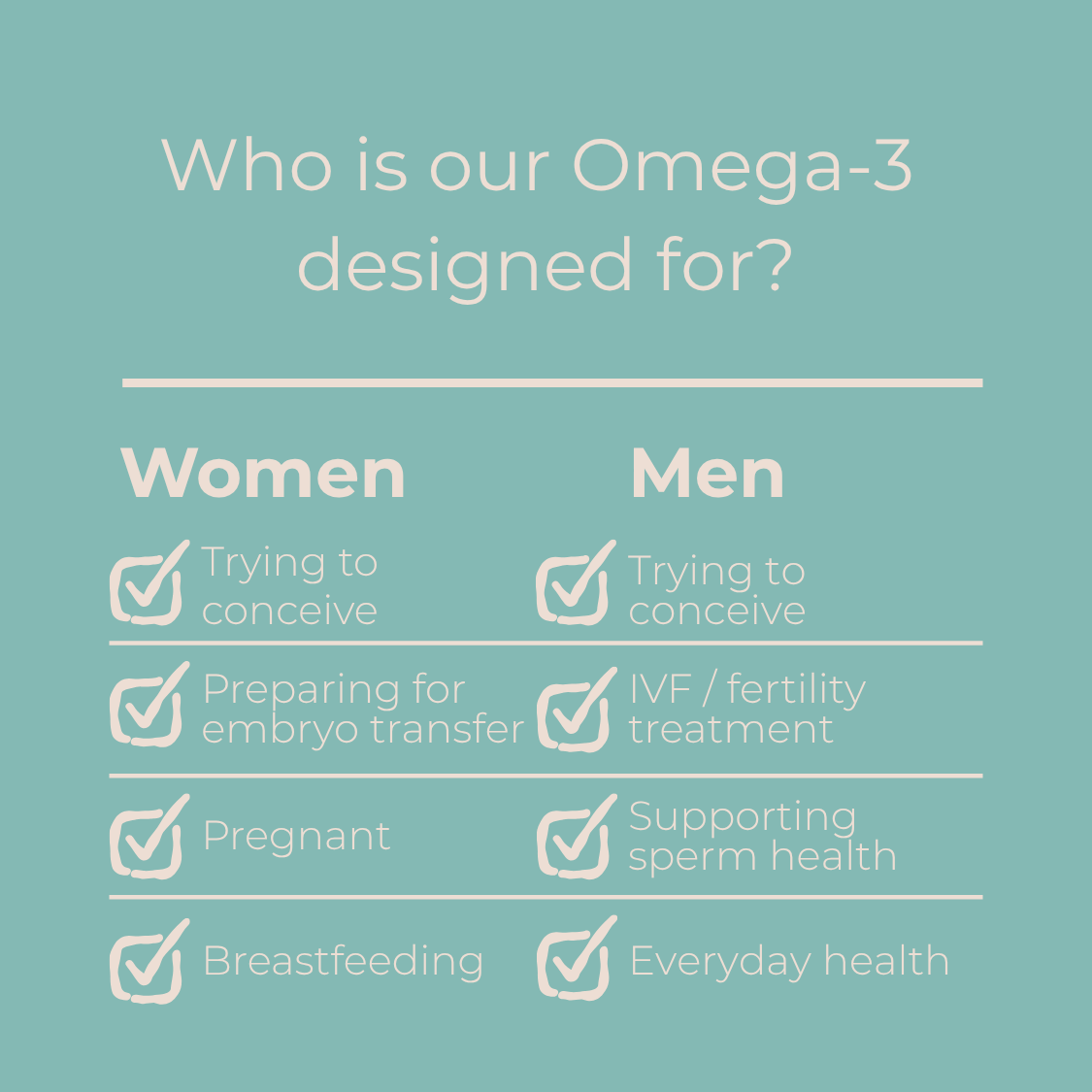
Women who are pregnant or breastfeeding
Fundamental Woman is designed to support you through every stage of motherhood—from trying to conceive, through pregnancy and into breastfeeding. It contains folate and vitamin D as recommended during pregnancy, alongside thoughtfully selected forms of choline, iron, iodine, omega-3 companion nutrients and other essential vitamins and minerals to provide a comprehensive nutritional foundation for both mum and baby.
Your omega-3 needs increase during pregnancy and breastfeeding, and diet alone rarely covers the gap. DHA is essential for your baby's brain and visual development throughout pregnancy and in the months after birth.
How should I take it?
How should I take it?
Fundamental Woman
Take 2 capsules daily with food. Easy to swallow, with a mild botanical taste.
Omega-3
Take two softgels daily with food.
Store in a cool, dry place, no need to refrigerate.
What's inside?
What's inside?
- Folate (5-MTHF) the active form your body uses immediately, 400µg
- Choline for fetal brain development, often absent from other prenatals, 250mg
- Vitamin B12 (methylcobalamin) the active form, not the cheaper synthetic version, 200µg
- Iron (ferrous bisglycinate) gentlest, most absorbable form, 15mg
- Vitamin D3 1000% NRV, 50µg
- Vitamin K2 (MK-7) works with Vitamin D3, 90µg
- Iodine (knotted kelp) thyroid function and baby's cognitive development, 150µg
Full ingredients
Choline (Choline Bitartrate), Brown Rice Flour (Oryza sativa), Vitamin C (Ascorbic Acid), Iron (Ferrous Bisglycinate), Zinc (Zinc Bisglycinate), Selenium Enriched Yeast (Saccharomyces cerevisiae), Iodine (Knotted Kelp), Vitamin D3 (Cholecalciferol), Vitamin B3 (Nicotinamide), Beta Carotene (Daucus carota), Vitamin E (D Alpha Tocopherol Succinate), Vitamin B1 (Thiamin Hydrochloride), Vitamin B6 (Pyridoxine Hydrochloride), Vitamin B2 (Riboflavin), Vitamin K2 (Menaquinone-7), Manganese (Manganese Bisglycinate), Vitamin B5 (Calcium Pantothenate), Copper (Copper Sulphate), Vitamin B9 (5-Methyltetrahydrofolate), Chromium (Chromium Picolinate), Vitamin B12 (Methylcobalamin), Biotin (D-Biotin). Vegetable Capsule Shell (HydroxyPropylMethylCellulose).
Nutritional information
Choline: 250mg | Vitamin C: 200mg (250% NRV) | Iron: 15mg (108% NRV) | Zinc: 15mg (150% NRV) | Selenium: 100µg (182% NRV) | Iodine: 150µg (100% NRV) | Vitamin D3: 50µg (1000% NRV) | Niacin: 16mg NE (100% NRV) | Beta Carotene: 3mg | Vitamin E: 12mg α-TE (100% NRV) | Vitamin B1: 10mg (909% NRV) | Vitamin B6: 8mg (571% NRV) | Vitamin B2: 8mg (571% NRV) | Vitamin K2: 90µg (120% NRV) | Manganese: 1mg (50% NRV) | Pantothenic Acid: 5mg (83% NRV) | Copper: 1mg (100% NRV) | Folate (5-MTHF): 400µg (200% NRV) | Chromium: 40µg (100% NRV) | Vitamin B12: 200µg (8000% NRV) | Biotin: 50µg (100% NRV)
NRV = Nutrient Reference Value. Where no NRV is listed, none has been established.
Omega-3
EPA (Eicosapentaenoic acid) 660mg per daily dose
DHA (Docosahexaenoic acid) 440mg per daily dose
Total omega-3: 1,100mg per daily dose
Pure fish oil from anchovy (ethyl ester form)
Coating: gelatin (bovine), glycerol, water.
ALLERGY INFORMATION: CONTAINS FISH
How is it different?
How is it different?
This set combines:
- Fundamental Woman – providing folate, vitamin D and a comprehensive blend of essential vitamins and minerals, including choline, iron and iodine.
- Fundamental Omega-3 – delivering high-strength DHA and EPA to complement your prenatal nutrition.
Created by a doctor and formulated with quality, bioavailability and simplicity in mind, Pregnancy Fundamentals gives you confidence that you're covering the essentials—without the overwhelm of researching, buying and reordering multiple products.
One bundle. One daily routine. One less thing to think about.
- Methylated B vitamins: forms your body can use immediately, regardless of your genetics
- 250mg choline: missing from most prenatals
- No magnesium stearate, silicon dioxide or industrial oils
- Amber glass bottles: protect ingredients from light degradation and reduce your exposure to plastic


Allergen information
This product contains fish.
It is free from the remaining 13 major allergens as defined by UK food supplement labelling regulations, including gluten and soya.
and beyond
of DHA

"I spent years taking a prenatal I didn't fully trust. As a doctor, I knew what was missing. So I made one that's comprehensive, clean and has the right forms of nutrients at the right doses."
-
Folate your body can use from day one Not the synthetic form it has to convert first, and some women struggle to convert efficiently.
-
Clean, premium formulations No nasties like magnesium stearate or silicon dioxide.
-
Covers every stage without switching From the first month of trying, through pregnancy and breastfeeding: one product, no waste, no gaps.
-
Designed to work alongside our other products Whatever stage you're in: no gaps, no doubling up. Fundamental Woman is the foundation your full protocol is built on.
Every ingredient, and why it's included
Pregnancy Fundamentals combines Fundamental Woman with high-strength Omega-3 to provide 23 carefully selected nutrients for pregnancy and breastfeeding. From active folate and choline to DHA and EPA, every ingredient has been chosen for a specific purpose and in forms we trust.
Every nutrient, and why it's included
Pregnancy Fundamentals combines Fundamental Woman with high-strength omega-3, providing 23 carefully selected nutrients to support pregnancy and breastfeeding. Explore each section to see how the complete set supports you and your baby at each stage.
One of the most important nutrients in early pregnancy, and one where the form matters. We use 5-MTHF, an active form of folate that is ready for the body to use during the period of rapid growth and cell division in early pregnancy.
Adequate maternal folate status is well established as important in early pregnancy. Most prenatals use folic acid, which must be converted to 5-MTHF before use. Up to 40% of women carry a variant of the MTHFR gene that impairs this conversion. A 2017 meta-analysis in the European Journal of Clinical Nutrition found that 5-MTHF raises blood folate levels more effectively than folic acid regardless of MTHFR status.
Critical for fetal brain and spinal cord development, and almost always missing from standard prenatals.
Choline is required for synthesis of phosphatidylcholine, a key structural component of cell membranes, and acetylcholine, involved in memory and muscle function. A 2018 randomised controlled trial published in the FASEB Journal found that higher maternal choline intake was associated with improved infant information processing speed. The adequate intake during pregnancy is 450mg/day; most prenatals contain none.
Most people in the UK are deficient. Vitamin D receptors are present in the uterus and placenta, and adequate levels are associated with better outcomes throughout pregnancy.
Vitamin D receptors are present in the uterus and placenta, and adequate vitamin D status supports normal maternal immune function and the maintenance of healthy bones. The UK government recommends a daily vitamin D supplement during pregnancy and breastfeeding.
Essential for carrying oxygen to your growing baby. The bisglycinate form absorbs well without the constipation or nausea of standard iron supplements.
Ferrous bisglycinate is a chelated form in which iron is bound to glycine, improving absorption compared to ferrous sulphate while reducing GI side effects. A study in Acta Haematologica found equivalent or superior haemoglobin responses with markedly fewer GI complaints.
Essential for your baby’s cognitive development, especially in the first trimester before their own thyroid is working. Often low in UK diets.
Iodine is critical for fetal neurological development, particularly in the first trimester before the fetal thyroid is functional. The WHO classifies iodine deficiency as the leading preventable cause of intellectual disability worldwide. UK dietary surveys consistently show inadequate iodine intake in women of reproductive age.
Directs calcium to bones and teeth where it belongs, and makes sure the vitamin D3 in this formula does its job properly.
D3 increases calcium absorption; K2 (as MK-7) activates osteocalcin and matrix Gla-protein, directing calcium to bone and preventing arterial calcification. Supplementing D3 without K2 may allow calcium to deposit in soft tissue. MK-7 has a longer half-life than MK-4, maintaining active levels with a single daily dose.
Widely used for nausea relief in early pregnancy, and recommended as a first-line approach in several clinical guidelines.
A 2014 Cochrane review found vitamin B6 associated with reduced nausea severity in early pregnancy. It is recommended as a first-line approach for pregnancy nausea in several clinical guidelines, and plays a role in oestrogen metabolism and neurotransmitter synthesis.
Supports the cellular energy your body needs during rapid fetal development, and plays a role in DNA repair.
Niacin is a precursor to NAD+, a coenzyme central to cellular energy production and DNA repair. Research into the role of NAD+ during early development has generated significant scientific interest in adequate niacin status during pregnancy, particularly given NAD+'s role in the energy-intensive processes of rapid cell division in the developing embryo.
Provides vitamin A without the toxicity risk of preformed retinol, which is contraindicated during pregnancy.
Preformed vitamin A (retinol) is teratogenic at high doses and specifically contraindicated in pregnancy supplements. Beta carotene is converted to retinol on demand; the body regulates this conversion according to its needs, making excess intake safe. This is why Fundamental Woman uses beta carotene rather than retinol.
A component of coenzyme A, which is central to energy metabolism and involved in steroid hormone production.
Pantothenic acid is a precursor to coenzyme A (CoA), which participates in over 100 metabolic reactions including the citric acid cycle and fatty acid synthesis. CoA is also required for the synthesis of steroid hormones including progesterone, which is key for early pregnancy.
Required for forming the structural components of bone and cartilage, important as your baby’s skeleton develops.
Manganese is a cofactor for manganese superoxide dismutase (MnSOD), a mitochondrial antioxidant enzyme. It is also required for the synthesis of glycosaminoglycans, structural components of bone and cartilage, which is key for fetal skeletal development.
Plays a role in how genes switch on and off during fetal development, increasingly recognised as important in early embryo growth.
Biotin is a cofactor for five carboxylase enzymes involved in fatty acid synthesis, amino acid metabolism, and gluconeogenesis. It plays a role in histone modification and gene expression regulation, increasingly recognised as relevant to embryonic development. Biotin deficiency has been associated with fetal abnormalities in animal studies.
DHA is an important structural fat in the brain and retina. Maternal DHA intake supports normal development of your baby’s brain and eyes during pregnancy.
DHA accumulates rapidly in the fetal brain and retina, particularly during the third trimester. Maternal intake contributes to the normal brain and eye development of the fetus; the beneficial effect is obtained with a daily intake of 200mg DHA in addition to the recommended daily intake of 250mg EPA and DHA for adults.
EPA works alongside DHA as part of a high-strength omega-3 intake, complementing the vitamins and minerals in Fundamental Woman.
EPA and DHA are long-chain omega-3 fatty acids found primarily in oily fish. EPA complements DHA within maternal omega-3 status and contributes, together with DHA, to normal heart function at a daily intake of 250mg EPA and DHA.
† No Nutrient Reference Value (NRV) has been established.
Iodine in breast milk depends directly on what you eat. Your baby’s thyroid relies on your supply until they start on solids.
Iodine is actively secreted into breast milk and recommended intake increases during breastfeeding. UK dietary surveys show widespread inadequacy in women of reproductive age, particularly those avoiding dairy. Iodine is essential for thyroid hormone production, which regulates your baby’s metabolism and neurological development in the months after birth.
B12 in breast milk reflects your own levels. Deficiency in breastfed babies, particularly from plant-based diets, can affect neurological development.
Breast milk B12 content reflects maternal status. Adequate B12 supports normal neurological development in breastfed infants, and is particularly important for mothers following plant-based diets, where dietary sources are limited. Methylcobalamin is the active form that directly participates in cellular processes without requiring conversion.
Choline passes into breast milk and continues to support your baby’s brain development after birth. Higher maternal intake during lactation is associated with better infant cognitive outcomes.
A 2018 randomised controlled trial (Caudill et al., FASEB Journal) found that higher maternal choline intake was associated with improved infant information processing speed and attention at 4, 7, 10, and 13 months. Separate clinical trial data show that higher maternal plasma choline correlates with improved infant cognition at one year. The adequate intake recommendation increases to 550mg/day during lactation, yet most women fall well short of this.
Pregnancy and lactation both deplete vitamin D. Continuing to supplement postpartum protects your bone health and supports your baby’s development.
Maternal vitamin D stores are depleted during pregnancy and continuing demand during lactation extends this depletion. The UK Chief Medical Officers recommend continued vitamin D supplementation for breastfeeding women. Vitamin D is essential for calcium absorption, immune function, and musculoskeletal health in both mother and infant.
Iron levels often take months to recover after delivery. The bisglycinate form supports repletion without the side effects that make standard iron supplements hard to stick with.
Iron depletion following birth, from blood loss during delivery and the demands of lactation, is common. Ferrous bisglycinate offers equivalent or superior haemoglobin response to ferrous sulphate with markedly fewer GI side effects, making consistent daily use more achievable.
Folate is secreted into breast milk to support your baby’s rapid cell growth. We use the active form, 5-MTHF, which works even if your body struggles to convert standard folic acid, a limitation that affects up to 40% of women. Requirements remain elevated throughout lactation.
Breast milk folate content is maintained at the expense of maternal stores. The active 5-MTHF form ensures bioavailability regardless of maternal MTHFR status, and is directly usable by both mother and infant.
Thiamin passes into breast milk and is essential for infant neurological development. Maternal depletion during lactation is a documented risk.
Breast milk thiamin content reflects maternal intake, and maternal depletion during lactation has been documented. Adequate thiamin supports normal neurological development and energy metabolism in breastfed infants.
DHA is transferred into breast milk and continues to support your baby’s developing brain and eyes after birth.
Breast milk DHA levels are influenced by maternal dietary intake. Maternal DHA intake contributes to the normal brain and eye development of breastfed infants; the beneficial effect is obtained with a daily intake of 200mg DHA in addition to the recommended daily intake of 250mg EPA and DHA for adults.
EPA complements DHA and helps make the bundle a more complete daily nutritional foundation while breastfeeding.
EPA and DHA are long-chain omega-3 fatty acids. Together they contribute to normal heart function at a daily intake of 250mg EPA and DHA, while maternal DHA intake supports normal brain and eye development in breastfed infants.
† No Nutrient Reference Value (NRV) has been established.
Need something else?
-
Magnesium | Magnesium bisglycinate
Regular price £22.00 GBPRegular price

- Choosing a selection results in a full page refresh.
- Opens in a new window.