Fertility Hero Pure Myo-Inositol
Fertility Hero Pure Myo-Inositol
Hormonal balance and ovarian function support
- 4g myo-inositol per day — delivered in two 2g doses
- Studied in women with PCOS and in preconception & fertility research
- Pure formulation — myo-inositol + plant-based capsule, nothing unnecessary
- Plastic-free compostable pouch — less waste, no single-use plastic, less plastic exposure for you
- Fertility, metabolic health & beyond — including women with PMOS (formerly PCOS) and those preparing for IVF or egg freezing
- 180 capsules = 30 day supply
 60 day money-back guarantee on your first order.

- Inspired by our fertility journey
- Made in the UK to GMP standards
- Free UK shipping over £45
Couldn't load pickup availability
What is it?
What is it?
A pure myo-inositol supplement providing 4g per day, split into two 2g doses — reflecting the dosing commonly used in clinical research.
Each capsule contains just myo-inositol in a plant-based HPMC shell, with no unnecessary fillers or excipients.
180 capsules = 30 day supply.
Supplied in a plastic-free compostable pouch, suitable for home composting depending on local conditions and facilities.
Who is it for?
Who is it for?
For women interested in myo-inositol as part of their preconception or metabolic health routine, particularly those with PCOS or insulin resistance, and women preparing for IVF or egg freezing.
Myo-inositol has also been studied in male reproductive health and in women through later stages of reproductive life, including postmenopause.
Suitable for vegetarian and vegan diets.
How should I take it?
How should I take it?
Take 3 capsules twice daily with food, giving a total daily intake of 4g myo-inositol.
For example, take three capsules in the morning and three in the evening. Divided dosing also reflects the way myo-inositol has commonly been used in clinical studies.
Can be taken alongside Fundamental Woman, Fundamental Man, Omega-3, CoQ10 and magnesium bisglycinate.
What's inside?
What's inside?
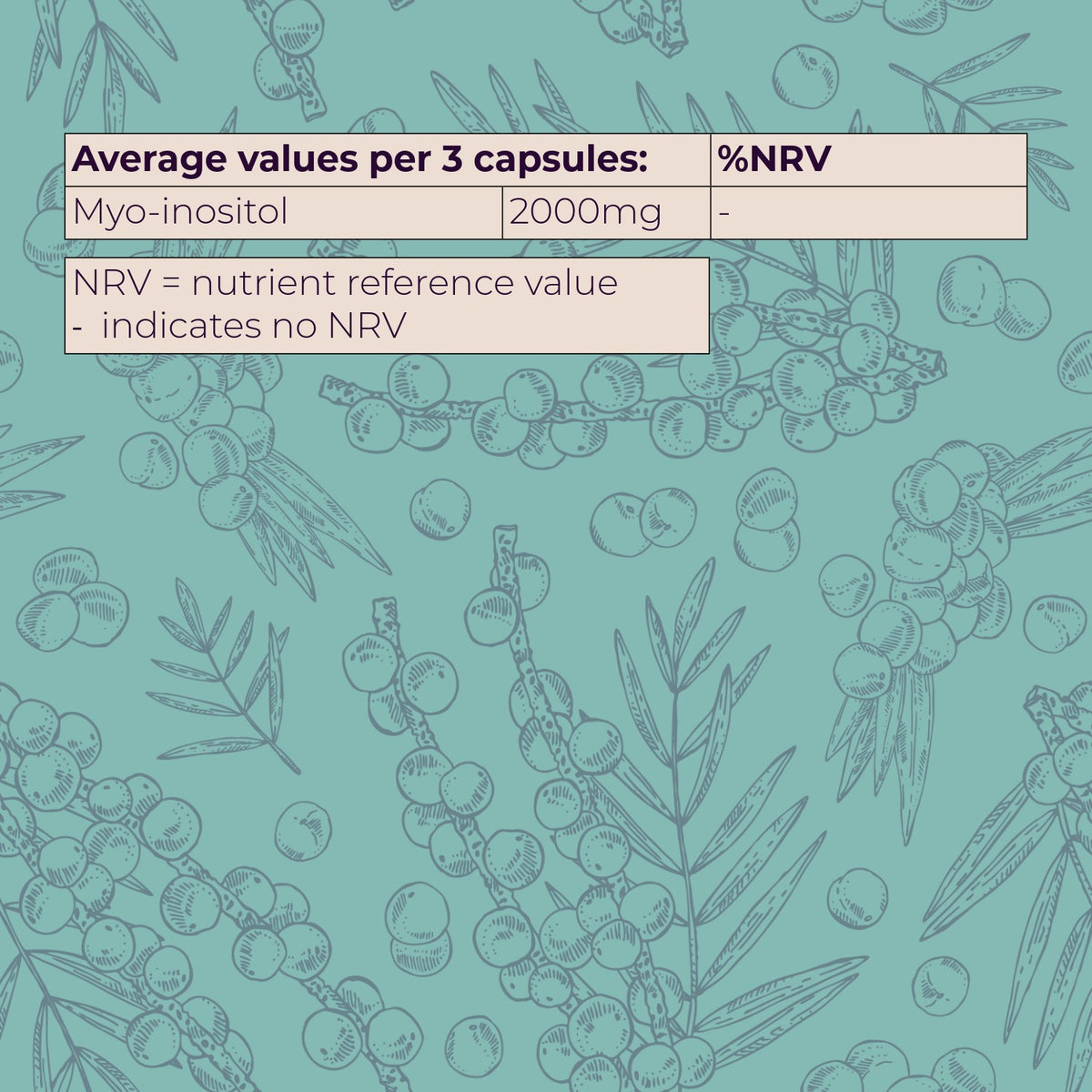
Myo-inositol — 2,000mg per dose / 4,000mg per day
HPMC capsule shell — plant-based and suitable for vegans.
Nothing else. No magnesium stearate, silicon dioxide or unnecessary fillers.
Supplied in a plastic-free compostable pouch, suitable for home composting depending on local conditions and facilities.
How is it different?
How is it different?
4g daily dose: provides the amount of myo-inositol commonly used in clinical research.
Divided dosing: 2g twice daily, reflecting the dosing used in many studies.
Pure formulation: just myo-inositol and a plant-based HPMC capsule shell.
Nothing unnecessary: no magnesium stearate, silicon dioxide or additional fillers.
Plastic-free packaging: 180 capsules supplied in a compostable pouch rather than a single-use plastic container.
Fits alongside your wider routine: can be combined with our prenatal, CoQ10, Omega-3 and magnesium products.


Allergen information
This product is free from all 14 major allergens as defined by UK food supplement labelling regulations, including gluten and soya.
Who is this for?

“I first became interested in myo-inositol when I was preparing for IVF. I didn’t have PMOS (formerly PCOS) or insulin resistance, but I was fascinated to find that the research wasn’t limited to women who did.
I chose to include it in my own preconception routine, and when we created ours I wanted to stay close to the research: pure myo-inositol, a 4g daily dose and nothing unnecessary. It’s a simple product, but one with a really interesting and evolving body of research behind it.”
Myo-inositol: what does the research tell us?
Fertility Hero Myo-Inositol provides 4g myo-inositol per day, split into two 2g doses. Research spans PMOS (formerly PCOS), metabolic health, assisted reproduction and male reproductive health.
Myo-inositol is involved in insulin signalling — the process by which cells respond to insulin — and this has made it an important area of research in PMOS, where insulin resistance is common. Clinical studies have investigated inositol in relation to metabolic, hormonal and reproductive markers in women with PMOS.
Clinical trials and systematic reviews have investigated inositol across metabolic, hormonal and reproductive outcomes in women with PMOS. Some studies have reported improvements in measures of insulin resistance, glucose and androgen levels and menstrual-cycle regularity, although results vary between studies and the overall evidence continues to evolve.
Myo-inositol is naturally present in follicular fluid, which surrounds the developing egg. It has been studied in women undergoing IVF, including women both with and without PMOS, with researchers looking at ovarian stimulation, oocyte maturity and other assisted-reproduction outcomes.
Clinical trials and meta-analyses have investigated myo-inositol before and during ovarian stimulation. Research has reported findings including reduced gonadotropin requirements and, in some analyses, a higher proportion of mature oocytes. Results for embryo quality, pregnancy and other IVF outcomes are mixed, making this an interesting and still developing area of fertility research.
Myo-inositol isn't only being studied in women. It is naturally present in the male reproductive system, and research has investigated supplementation in relation to semen quality and male reproductive health.
A 2024 systematic review and meta-analysis of 16 studies reported associations between myo-inositol supplementation and improvements in total and progressive sperm motility and testosterone levels, alongside a reduction in sperm DNA fragmentation. Male research is less established than the literature in women, but it is an interesting and growing area of study.
Interest in myo-inositol extends beyond fertility. Researchers have also investigated inositol supplementation and metabolic health later in women's lives, including in postmenopausal women.
Studies in postmenopausal women have explored myo-inositol in relation to metabolic markers including insulin resistance and lipid profiles. This research is much less extensive than the literature in PMOS, but it broadens the scientific interest in myo-inositol beyond the preconception years.